


Fund managers are held to high standards. Acquisitions are modelled, stress-tested and challenged at committee. Financing is benchmarked against the market whilst valuations are reviewed and reported.
Yet the decision that sets an asset's revenue for years at a time is often made on far thinner evidence.
Many PPAs are still agreed through a few bilateral conversations with offtakers the generator already knows. Familiar counterparties make for a comfortable process, but don't necessarily make for the best price, and with little to compare against, it is hard to tell.
In regulated financial markets, best execution is a defined obligation. Firms must show they took sufficient steps to achieve the best possible result for their clients. PPAs carry no equivalent formal requirement. However, the underlying expectation from investors is much the same: show us you got the best price.
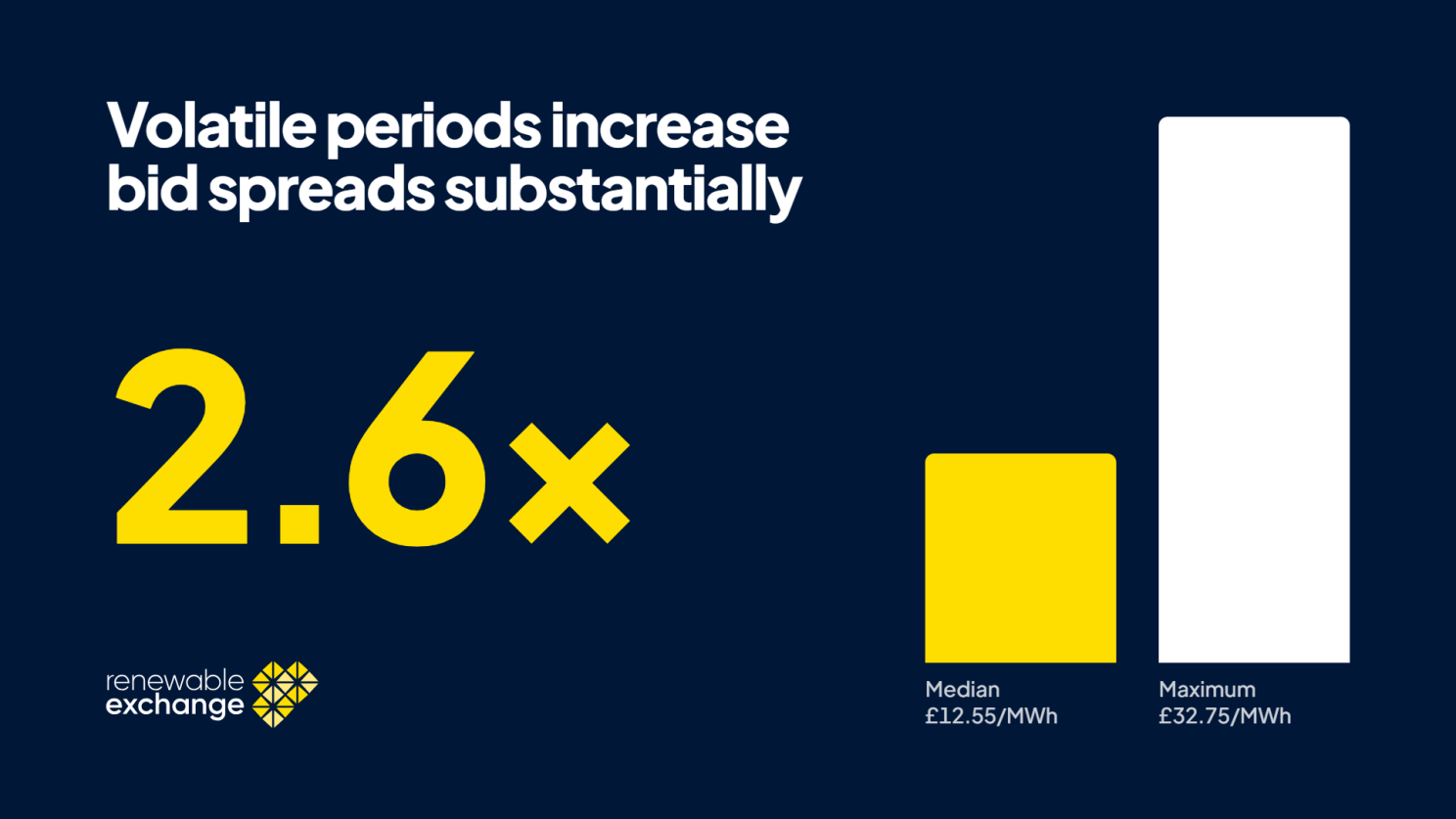
When markets were calmer, the bid spread was more consistent- as soon as you hit volatility they expand significantly.
Volatile wholesale prices significantly widen the range of outcomes. A PPA priced a few pounds per megawatt hour below what the market would have paid can represent a material impact over the term of a PPA.
A defensible route to market has four features.
1. Genuine competitive tension. Multiple credible offtakers pricing the same opportunity at the same time.
2. Comparable terms and bids. Bids that can be easily assessed like for like, and a level playing field on contracting.
3. A documented process. A clear record of who was approached, what was offered and why the chosen bid won.
4. Market context. An understanding of where pricing sits relative to the wider market, so the result can be judged on more than the bids in front of you.
Most fund managers recognise these principles, the difficulty comes when you try to apply them.
Pricing in the PPA market is not widely available (check out our PPA Composite Index). Contracts vary from offtaker to offtaker, which makes bids hard to compare. Whilst running a competitive process manually takes time, for some it takes months!
The result is that many with PPA responsibilities accept a process they know is imperfect, because the alternative appears too costly.
That trade-off is becoming less necessary. Marketplace platforms, like Renewable Exchange, can put an opportunity in front of multiple offtakers at once. Standardised contracts make bids directly comparable and market data gives owners a benchmark to judge the results against.
At Renewable Exchange, this is the problem we set out to solve: a competitive, transparent and documented route to market that creates value, whilst reducing the timeframe from months to hours.
For any fund manager reviewing their approach:
If you want to chat any of this through, get in touch. If question 6 landed with "I want to create extra value", we should definitely have a chat.


